
If you run a small business in the UAE, you've probably heard the term E-Invoicing in UAE mentioned more often lately, usually alongside a deadline or a warning. Between Ministry of Finance updates and software vendors promoting new tools, it's easy to feel like you're missing something important. So let's answer the question plainly: how does E-Invoicing in UAE work for small businesses, and what do you actually need to do about it in 2026?
The short version is that E-Invoicing in UAE is not just a PDF invoice emailed to a client. It is a structured digital exchange of invoice data between your accounting system, an approved intermediary, and the Federal Tax Authority (FTA). For small businesses, understanding how E-Invoicing in UAE works now means fewer surprises later, especially as the UAE moves toward mandatory compliance in phases through 2027.
What Is E-Invoicing, Exactly?
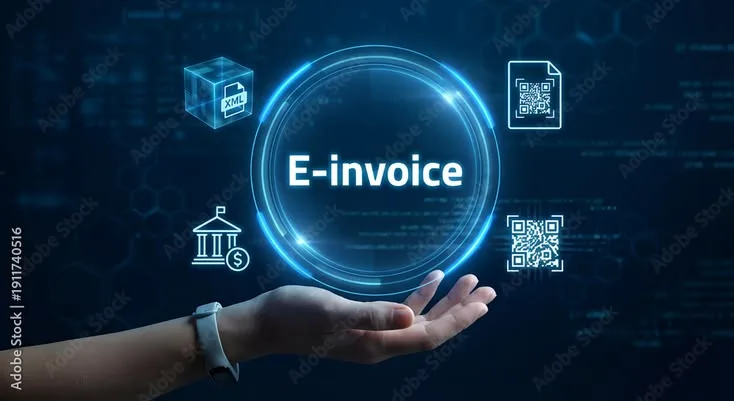
An e-invoice is not simply an invoice sent electronically. A PDF, Word document, or scanned paper invoice does not qualify, even if it's emailed instantly. A genuine e-invoice is generated in a structured format (typically XML, following standards like PINT-AE or UBL) that computer systems can read, validate, and process automatically without a human retyping the data.
This matters because the UAE's Electronic Invoicing System (EIS) is built around machine-to-machine communication. Your accounting software talks to an Accredited Service Provider (ASP), which validates the invoice and forwards it to both the buyer's system and the FTA. No manual data entry, no attachments, no ambiguity.
How Does E-Invoicing Work for Small Businesses? The Step-by-Step Process
This is the part most small business owners actually want answered: how does e-invoicing work for small businesses day to day, once it applies to you?
You create an invoice as usual in your accounting or invoicing software, the same way you do today.
The software converts it into a structured XML format that meets FTA data requirements.
An Accredited Service Provider (ASP) validates the invoice details, checks for errors, and adds any required identifiers.
The invoice is transmitted simultaneously to the buyer's ASP and to the FTA's e-Billing system for compliance monitoring.
The buyer receives a fully structured, tax-compliant invoice that their own system can process automatically.
For most small businesses using modern cloud accounting software, this entire sequence happens in the background. You still create and send invoices the way you always have; the compliance layer simply runs underneath it.
UAE E-Invoicing Timeline for Small Businesses
The rollout is phased by business size and transaction type:
If your business mainly invoices consumers, salons, restaurants, retail, or clinics, for example, you are largely unaffected by the initial phases. The framework currently targets B2B and B2G transactions first.
Is a PDF or Excel Invoice an E-Invoice?
No. This is one of the most common misunderstandings.
What Small Businesses Should Do to Prepare
You don't need to overhaul your operations today, but a few practical steps make the transition smoother:
Clean up customer records. TRNs and complete buyer details will become mandatory for qualifying transactions.
Confirm your software's readiness. Ask your accounting platform whether it is preparing FTA-accredited e-invoicing support.
Understand your scope. Check whether your revenue and transaction type place you in an early or later compliance phase.
Get professional guidance. A VAT consultancy or tax accounting partner can map out exactly when and how the rules apply to your business.
Why This Matters Beyond Compliance
Understanding how e-invoicing works for small businesses isn't just about avoiding penalties (which can reach AED 5,000 per month for late ASP appointment). Structured invoicing also reduces manual errors, speeds up payment reconciliation, and gives you cleaner records for VAT filing and audits. Businesses that prepare early, rather than scrambling near their deadline, tend to have a far smoother transition.
How ADS Auditors Can Help
At ADS Auditors, we help small and medium businesses across Dubai, Abu Dhabi, Ras Al Khaimah, and beyond understand exactly where they stand under the UAE's Electronic Invoicing System. Our team supports businesses with VAT registration, VAT filing, corporate tax registration, and ongoing compliance, so e-invoicing readiness fits naturally into your broader tax obligations rather than becoming a separate headache. If you'd like a clearer picture of how e-invoicing works for small businesses in your specific situation, contact our team for a consultation. You can also read our detailed breakdown on how UAE businesses can prepare for mandatory e-invoicing.
Frequently Asked Questions
Leave a Comment
Have a question or a thought on this article? Share it below and our team will be in touch.