
The UAE is entering a new phase of digital tax transformation. Under Ministerial Decisions No. 243 and 244 of 2025, the Ministry of Finance and the Federal Tax Authority (FTA) are rolling out a nationwide Electronic Invoicing System (EIS) built on the Peppol network. A voluntary pilot opened on 1 July 2026, with mandatory adoption phased in from January 2027 through October 2027.
For business owners, CFOs, finance managers, and accountants in Dubai, Abu Dhabi, and Ajman, UAE e-Invoicing Compliance is no longer a future concern - it is an operational shift that touches ERP systems, VAT reporting, and day-to-day invoicing habits. Unlike earlier tax changes that mainly affected finance teams, this mandate reaches into procurement, sales operations, and IT, since every invoice a business issues or receives will eventually need to pass through a structured, validated digital channel.
This guide breaks down what e-invoicing means, why the UAE is introducing it, how the workflow functions in practice, and what it means specifically for businesses operating in Dubai, Abu Dhabi, and Ajman. It also outlines how ADS Auditors helps companies across the Emirates prepare with confidence - from initial readiness assessments through to full ERP integration and ongoing compliance support.
Mandatory Rollout Timeline
What is E-Invoicing in UAE?
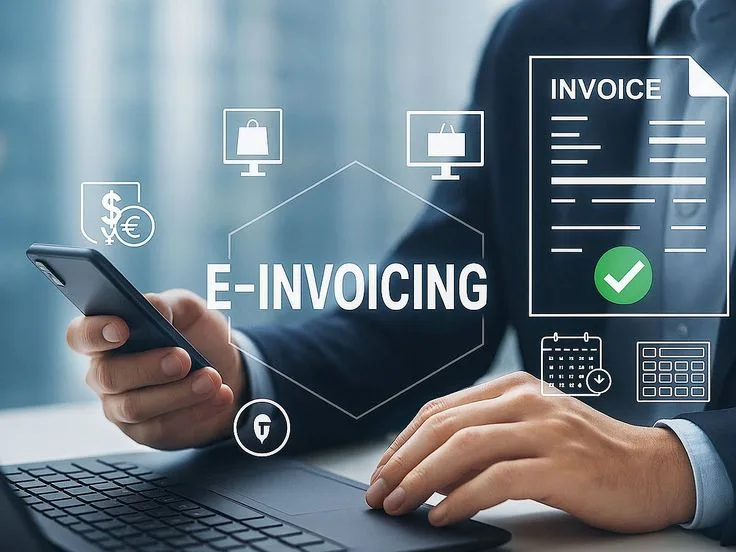
E-invoicing is the exchange of structured, machine-readable invoice data between a supplier and a buyer through an accredited digital network, rather than sending a document a person reads on screen.
This is a meaningful shift from current practice:
PDF or paper invoices are static documents. A human reads them, and the data inside them is not automatically understood by another system.
E-invoices are generated in a structured XML format - specifically the PINT-AE standard, based on Peppol International (PINT) - so accounting and tax systems can validate, process, and report the data without manual re-entry.
Why is UAE Introducing E-Invoicing?
The Ministry of Finance has framed e-invoicing as part of a broader digital economy strategy, with several goals driving adoption:
Digital transformation – aligning invoicing with the UAE's wider push toward paperless, automated government and business processes.
Tax transparency – giving the FTA structured, standardised data instead of inconsistent paper trails.
Fraud prevention – structured, validated invoices are harder to falsify or duplicate than PDFs.
Faster reporting – near real-time transmission shortens the gap between a transaction happening and the FTA seeing it.
How Does E-Invoicing Work?
The UAE e-invoicing workflow follows a consistent structure regardless of company size or emirate:
Invoice creation – The supplier's accounting or ERP system generates the invoice in the structured PINT-AE XML format rather than as a PDF.
Validation – The invoice is checked against FTA data field requirements and Peppol standards before it moves further.
Secure transmission – The invoice passes through the supplier's ASP to the buyer's ASP over the Peppol network.
Customer receipt – The buyer receives the structured invoice directly into their own accounting system.
ERP/accounting software integration – The data flows into VAT returns and financial reporting automatically, cutting out manual entry.
Key Benefits of E-Invoicing
Beyond compliance, e-invoicing brings measurable operational advantages:
Faster invoice processing – validated invoices move without manual checks or re-keying..
Reduced manual errors – less human intervention means fewer mismatches.
Cost savings – lower printing, storage, and administrative overhead over time.
Better cash flow – faster invoice delivery and validation can shorten payment cycles.
Increased security – digital signatures and encrypted transmission reduce fraud risk.
Environmentally friendly operations – a meaningful reduction in paper-based processes.
Who Should Implement E-Invoicing?
The mandate is broad by design. It applies to:
SMEs and startups, even those below the VAT registration threshold in some scenarios involving B2B/B2G transactions.
Large enterprises, particularly those with annual revenue of AED 50 million or more, who form the first mandatory wave from January 2027.
VAT-registered businesses of all sizes, who follow in the second wave from July 2027.
Free Zone businesses, which are equally in scope for B2B and B2G transactions.
E-Invoicing in Dubai
As the UAE's largest commercial hub, Dubai carries the highest concentration of businesses affected by the Electronic Invoicing System in Dubai. Free zone companies in DIFC, DMCC, and JAFZA, alongside mainland trading, retail, and professional services firms, will need to integrate e-invoicing in Dubai into ERP platforms such as Zoho, Tally, SAP, Oracle NetSuite, and QuickBooks.
E-Invoicing in Abu Dhabi
Abu Dhabi's public sector weight and large corporate base mean e-invoicing in Abu Dhabi will be shaped heavily by both the AED 50 million revenue threshold and the eventual B2G mandate for government-linked entities. Businesses researching e-invoicing Abu Dhabi requirements should note that government transactions become mandatory later, in October 2027, giving public-sector suppliers a longer runway.
E-Invoicing in Ajman
Ajman's economy leans heavily on SMEs, trading companies, and free zone entities operating through Ajman Free Zone (AFZA). For these businesses, e-invoicing Ajman readiness is less about enterprise-scale ERP overhauls and more about choosing the right lightweight, Peppol-certified accounting solution.
How ADS Auditors Can Help
ADS Auditors supports businesses in Dubai, Abu Dhabi, Ajman, and the other Emirates through every stage of e-invoicing readiness:
E-invoicing readiness assessment – reviewing current invoicing processes against FTA requirements.
VAT compliance – aligning e-invoicing data with ongoing VAT filing obligations.
Accounting advisory – ensuring financial records stay accurate through the transition.
Corporate Tax support – keeping e-invoicing changes consistent with corporate tax reporting.
Audit readiness – making sure e-invoicing records hold up under future financial audits.
Staff training – preparing finance teams to manage validation, exceptions, and reporting.
Ongoing compliance assistance – monitoring FTA guidance updates as the mandate matures.
Conclusion
ADS Auditors helps businesses across the Emirates move from uncertainty to readiness, covering everything from e-invoicing implementation to VAT compliance, corporate tax alignment, and ERP integration. Book a consultation with ADS Auditors today to assess your e-invoicing readiness and stay ahead of your mandatory deadline.
Frequently Asked Questions
Leave a Comment
Have a question or a thought on this article? Share it below and our team will be in touch.