
The term freezone labour law describes the employment rules for businesses and workers in UAE free zones. These rules cover contracts, pay, working hours, leave and dismissal.
Most free zones follow federal employment legislation alongside authority-specific procedures. DIFC and ADGM operate separate employment regimes, so the correct starting point is your employer’s jurisdiction.
This guide explains the employee rights, payroll checks and employer responsibilities that matter when hiring, managing staff or ending employment.
Understanding freezone labour law in the UAE
There is no single employment statute covering every UAE free zone. For most, Federal Decree-Law No. 33 of 2021, as amended, provides the main employment protections. The UAE Government’s private-sector employment guidance explains this federal framework.
Under freezone labour law, the relevant authority may administer contracts, work permits and complaint procedures without replacing federal employee protections.
DIFC applies its own Employment Law. ADGM also has separate Employment Regulations. Employers should check the applicable regime before using standard contracts or calculating benefits.
What must an employment contract include?
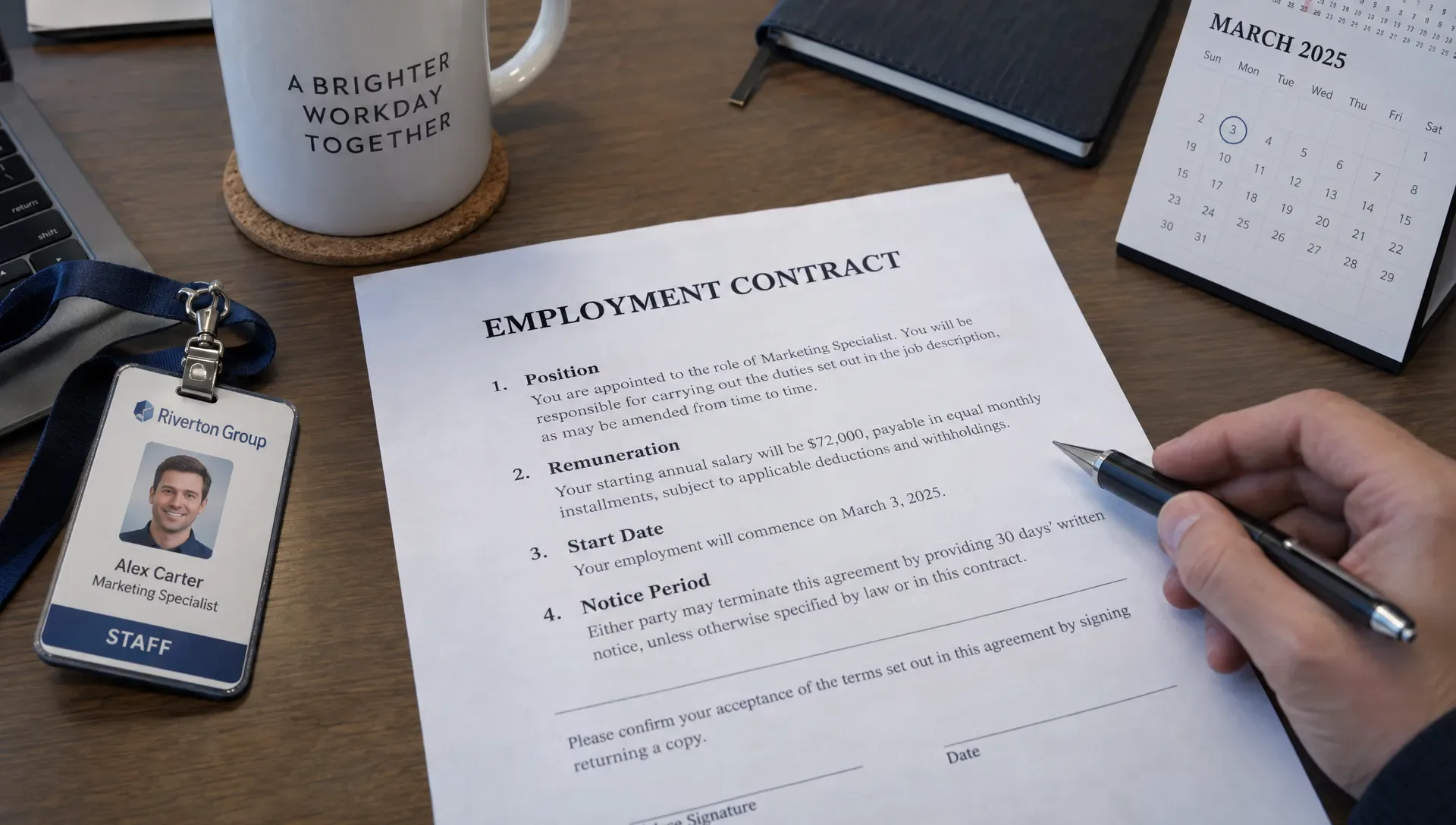
For freezone labour law compliance, a contract should clearly record the role, workplace, start date, remuneration, working arrangements and notice provisions. Separate basic salary from allowances because this distinction affects certain statutory calculations.
Federal-regime employment contracts are for a specified term and may be renewed. Probation cannot exceed six months, with specific notice requirements applying during that period.
Employers must arrange the appropriate work authorization before an employee starts. A residence visa alone does not establish permission to work for any company. Free zone permits also do not automatically authorize unrestricted mainland work.
Which employee rights apply?
The following freezone labour law entitlements summarize the federal framework. They should not be applied automatically to DIFC or ADGM employees.
Employees completing more than six months but less than one year generally receive two days of annual leave per month. Federal rules also reduce normal working hours by two hours daily during Ramadan.
Employers must prevent discrimination, harassment and forced labor. Recruitment and employment costs must not be charged to workers.
How should employers manage payroll and records?
Good freezone labour law administration requires accurate contracts, attendance records, leave balances and salary calculations. Pay wages on the agreed dates and check whether the Wage Protection System or another authority-approved arrangement applies to the establishment.
Federal-regime employers must retain employee records for at least two years after employment ends. Other legal obligations may require longer retention. Payroll files should explain salary changes, deductions, overtime and final settlements rather than recording only bank transfers.
Keep employment duties separate from AML obligations
Businesses covered by UAE AML obligations should coordinate HR onboarding with AML Registration, an enterprise-wide risk assessment (EWRA), an AML Policy Framework and role-appropriate AML Training. These are separate regulatory responsibilities, not universal requirements created by employing staff in a free zone.
Businesses exploring custom internal tools and workflow automation can use that approach to consolidate records and flag renewal dates. Restrict access to employee information and retain human approval for payroll calculations and employment decisions.
What happens when employment ends?
When applying freezone labour law to a termination, establish the governing regime before calculating notice or benefits. Under federal rules, ordinary contractual notice generally falls between 30 and 90 days. Probation and dismissal without notice have separate requirements.
Eligible foreign full-time employees under the federal gratuity system receive 21 days of basic wage per year for their first five years and 30 days for each subsequent year. Eligibility generally starts after one year of continuous service, with proportionate calculations thereafter and a statutory cap of two years’ wage.
Approved alternative savings arrangements may change the calculation. UAE nationals and eligible GCC nationals may fall under pension arrangements instead.
Federal rules generally require outstanding wages and other termination entitlements to be paid within 14 days after the contract ends.
Where should employment disputes go?
For a freezone labour law dispute, identify the correct authority rather than assuming every claim follows the same route. Depending on the jurisdiction, the process may involve the free zone authority, MOHRE where applicable or the relevant court.
Keep the signed contract, payslips, correspondence and termination documents. DIFC and ADGM have their own dispute-resolution arrangements. Obtain jurisdiction-specific legal advice promptly because filing deadlines and procedures differ.
Build compliance around the correct jurisdiction
Reliable freezone labour law compliance starts with identifying the governing rules, documenting employment terms and maintaining accurate payroll records. Employee rights cannot be replaced by informal agreements or assumptions about free zone status.
A D S Management Tax Consultany LLC supports accounting, tax and business compliance. Schedule a consultation to discuss the financial records and wider compliance processes supporting your workforce.
Frequently Asked Questions
Leave a Comment
Have a question or a thought on this article? Share it below and our team will be in touch.