
An Anti-Money Laundering Specialist in the UAE is a professional who helps businesses detect and prevent the use of illegal money. They review customer information and transactions to identify warning signs and support appropriate action
The role combines customer checks with risk assessment, reporting and employee education. This guide explains the specialist’s responsibilities, appointment requirements and practical skills, helping business owners distinguish operational support from the formally appointed compliance officer’s duties.Use it to assess your compliance needs and prepare focused questions before hiring a specialist or seeking professional support.
What Does an Anti-Money Laundering Specialist in the UAE Do?
An Anti-Money Laundering Specialist in the UAE supports the controls that protect a business against money laundering, terrorist financing and proliferation financing. Their work may involve reviewing customer files, investigating unusual activity and maintaining compliance procedures.
However, an analyst or external adviser is not automatically the organisation’s appointed compliance officer. Article 22 of Cabinet Resolution No. 134 of 2025 requires financial institutions, designated non-financial businesses and professions (DNFBPs) and virtual asset service providers to appoint a management-level compliance officer with independent decision-making, appropriate competence and experience.
The federal framework includes Federal Decree-Law No. 10 of 2025 and its executive regulations. Businesses must also check their supervisor’s applicable rules rather than assume identical appointment conditions across every sector.
Core Roles and Duties
Assessing Business Risks Through EWRA
An Anti-Money Laundering Specialist in the UAE helps translate identified risks into practical controls. An enterprise-wide risk assessment (EWRA) examines the business’s exposure across customers, services, geographic markets and delivery channels. It provides the basis for a risk-based compliance programme.
For example, a useful assessment should explain how the business handles complex ownership structures or transactions involving unknown third parties. Ask for documented reasoning rather than a generic risk score copied from a template.
Checking Customers and Beneficial Owners
An Anti-Money Laundering Specialist in the UAE supports customer due diligence by reviewing identification evidence and understanding who ultimately owns or controls a corporate customer. Beneficial ownership verification must use reliable, independent information and address control beyond straightforward share ownership where necessary.
Checks continue throughout the relationship. Customer information must remain current and transactions should match the business’s understanding of the customer’s activities and risk profile. Source-of-funds checks form part of that scrutiny where necessary.
Monitoring and Escalating Suspicious Activity
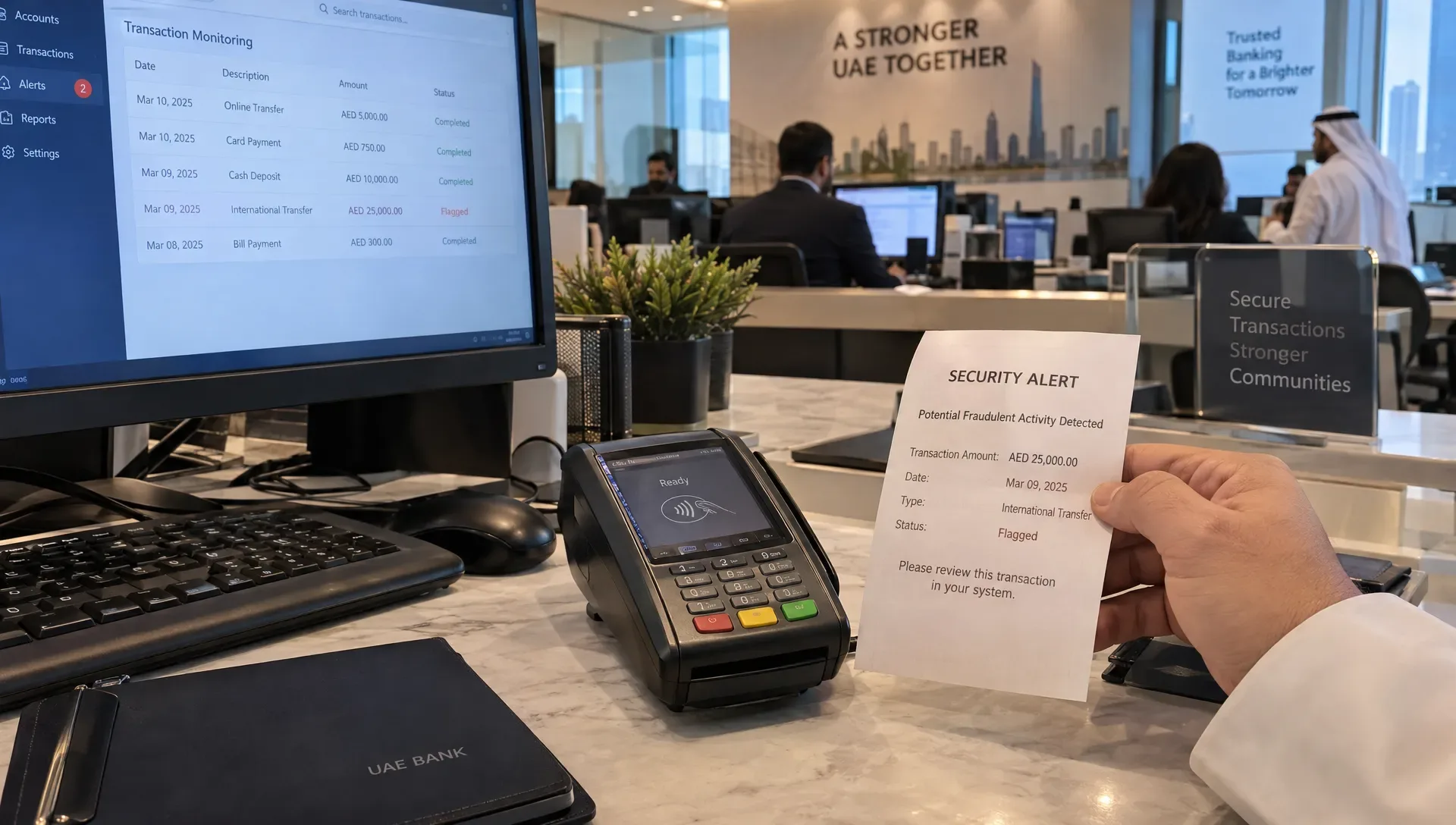
An Anti-Money Laundering Specialist in the UAE reviews alerts and unusual behaviour, documenting findings for appropriate escalation. The appointed compliance officer assesses suspicious transaction information and decides whether to notify the UAE Financial Intelligence Unit (FIU), recording reasons where a matter is retained without reporting.
Reporting entities use goAML to submit suspicious transaction reports or suspicious activity reports. The FIU’s guidance distinguishes suspicious transactions from suspicious activities or attempted transactions and requires prompt reporting. Confidentiality must be maintained throughout the process.
Maintaining Policies, Training and Records
The compliance officer reviews internal controls, recommends improvements and reports periodically to senior management. Their statutory responsibilities also include documented employee training and cooperation with supervisory authorities and the FIU.
The following table offers suggested evidence to request when assessing how these duties operate:
Requirements for an Anti-Money Laundering Specialist in the UAE
When appointing an Anti-Money Laundering Specialist in the UAE, assess whether the position is an operational support role or the statutory compliance officer function. The latter requires management-level authority, independence, competence and experience under Article 22.
Appointment arrangements also need to reflect the relevant supervisor’s expectations. The joint UAE guidance announced in April 2026 addresses governance, appointment, resources and independence. ADGM’s notice specifically states that its applicable AML Rulebook prevails if requirements conflict with that guidance.
For recruitment, ask candidates to demonstrate practical judgment. A useful interview exercise is to present an incomplete ownership chart or unexplained third-party payment and request a written review. Evaluate the questions they ask, the evidence they seek and the clarity of their conclusions.
Treat qualifications as one part of that assessment. Verify the credentials and any regulator-specific eligibility conditions instead of assuming that a certificate alone establishes suitability.
How ADS Auditors Can Support Your Business
ADS Auditors lists AML services covering registration, risk assessment, policy development and training. Its AML Registration service can support businesses with the goAML registration process. Reporting entities must register to submit suspicious reports through the FIU’s platform
Businesses can also explore support for an AML Policy Framework and employee AML Training. These services address different parts of the compliance programme, so discuss the scope needed for your business rather than treating registration as the complete solution.
Before engaging support, agree who maintains customer files, reviews alerts, approves procedures and handles regulatory correspondence. Ask for clear deliverables, reporting lines and arrangements for resolving outstanding issues.
Strengthen Your AML Compliance With Clear Responsibilities
An Anti-Money Laundering Specialist in the UAE needs more than a checklist. Effective support connects risk assessment, customer checks, monitoring and staff training with clearly assigned reporting responsibilities.
To discuss your EWRA, AML Registration or policy needs, contact ADS Auditors to schedule a consultation. Start by identifying the obligations that apply to your business and the controls that need attention.
Frequently Asked Questions
Leave a Comment
Have a question or a thought on this article? Share it below and our team will be in touch.