
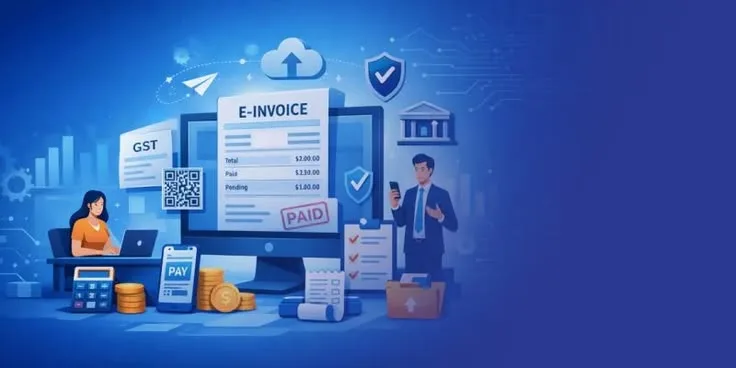
E-Invoicing preparation is the process of getting your business ready to create, send, receive and store invoices in the structured digital format required by the UAE framework. It means checking your data, systems and tax processes before mandatory digital invoicing becomes part of daily operations.
For UAE companies, 2026 is a practical deadline to improve invoice accuracy and reduce compliance risk. This article looks at E-Invoicing preparation from a business readiness angle, focusing on what owners, finance managers and CFOs should review now. Use this checklist to identify gaps early and plan the right support with ADS Auditors.
Why E-Invoicing preparation matters for UAE businesses in 2026
The UAE is moving toward a digital invoicing framework that will affect how businesses issue and exchange invoices. The Ministry of Finance has outlined the direction of the UAE e-invoicing programme, including structured invoice exchange through approved channels rather than simple PDF sharing.
E-Invoicing preparation is not only a software project. It affects tax registrations, VAT treatment, accounting workflows, master data, customer onboarding and internal approvals. If these areas are not aligned before implementation, companies may face invoice rejection, delayed collections or inaccurate tax reporting.
A strong plan also supports audit readiness. When invoice data is consistent and traceable, your finance team can respond faster to VAT reviews, corporate tax queries and management reporting requests.
For businesses that want a deeper overview of the expected UAE rules, ADS Auditors has also published a practical UAE e-invoicing compliance guide.
E-Invoicing preparation checklist for 2026
The best E-Invoicing preparation plan starts with a clear review of your current invoicing process. Do not wait until the final implementation stage to check whether your accounting software, tax records and customer data are ready.
1. Confirm your tax registration status
Your invoice data must match your official tax and business records. Start by checking your trade licence details, Tax Registration Number, VAT status, corporate tax registration and branch information.
If your VAT position has changed or your business has crossed the UAE VAT threshold, review your VAT Registration requirements before e-invoicing begins. Companies should also ensure their corporate tax profile is complete through proper Corporate Tax Registration.
E-Invoicing preparation should include a document-level review of the legal name, address, TRN and licence details used across invoices, contracts and accounting software.
2. Clean your customer and supplier master data
E-invoicing depends on accurate structured data. A misspelled customer name or outdated TRN can create validation issues once invoices are exchanged digitally.
Review every active customer and supplier record. Make sure you have correct legal names, billing addresses, tax numbers, contact details and payment terms. This is also the right time to remove duplicate records and inactive accounts.
A useful e-invoicing preparation UAE review should compare master data in your accounting software with trade licences, tax certificates and customer contracts. Any mismatch should be corrected before invoice automation is introduced.
3. Assess your accounting software and integrations
Your accounting system must be able to produce structured invoice data in the format expected by the UAE framework. It should also support invoice numbering, tax coding, credit notes, debit notes and secure record keeping.
Ask your software provider whether the system is preparing for UAE e-invoicing requirements. Check whether it can integrate with an Accredited Service Provider when required. Businesses using manual invoices, spreadsheets or older accounting tools should treat 2026 as the time to modernize.
E-Invoicing preparation must also cover user access rights. Only authorized employees should be able to create, approve or amend invoices.
4. Review VAT treatment and invoice content
E-invoicing will not fix incorrect VAT decisions. If VAT is charged wrongly or missing from an invoice, the structured invoice may still carry incorrect tax information.
Review common transaction types such as local taxable supplies, zero-rated exports, exempt supplies, advances, reimbursements, discounts and credit notes. Confirm that VAT codes in your accounting system match UAE VAT rules.
Your invoice templates should contain all required details such as supplier information, customer information, invoice number, date, tax amount and total value. E-Invoicing preparation helps ensure these fields are complete before digital validation becomes routine.
Readiness checklist table for UAE businesses
Use the table below to track your progress. Each area should have a responsible person and a target completion date.
This table is a practical starting point. For a tailored review, ADS Auditors provides E-Invoicing Consultation for UAE businesses preparing for the 2026 transition.
Internal controls to update before e-invoicing goes live
E-Invoicing preparation should include controls that reduce errors before invoices are issued. Clear controls are especially important for companies with multiple sales teams, branches or approval layers.
Start by documenting who can create invoices and who can approve them. Then set rules for invoice cancellation, credit notes, corrections and customer disputes. This prevents staff from making informal changes that could weaken your tax records.
You should also create a monthly review process. Finance teams can compare invoice totals with VAT returns, receivables reports and bank collections. This helps detect missing invoices or duplicate invoices before they become compliance problems.
Train your finance team and communicate with customers
Even the best system will fail if people do not understand the process. Staff need to know which fields are mandatory, how invoice approvals work and what to do when an invoice is rejected.
Provide practical training for finance, sales and operations teams. Keep the training focused on daily tasks such as customer onboarding, invoice creation, tax code selection and record retrieval.
Customer communication is also part of E-Invoicing preparation. Some customers may need updated billing details or new invoice receiving processes. Contact key customers early so your billing cycle is not disrupted.
Build a 2026 implementation timeline
A simple timeline keeps E-Invoicing preparation manageable. Begin with a gap assessment, then move to data cleanup, software review, process updates, staff training and testing.
Businesses with high invoice volumes should allow more time for testing. This includes sample invoices, credit notes, multi-branch transactions and cross-border scenarios. Smaller businesses should still complete the same checks, even if their process is simpler.
If your company is also dealing with VAT, AML or corporate tax compliance, align these workstreams instead of treating each one separately. ADS Auditors supports companies with tax consultancy, accounting services, compliance reviews and advisory support across these connected areas.
Conclusion
E-Invoicing preparation gives UAE businesses a clear path to cleaner invoice data, stronger VAT controls, better accounting records and smoother compliance. The most important steps are to verify tax registrations, clean customer and supplier records, assess accounting software, update approval controls and train your team.
The main message is simple: do not treat e-invoicing as a last-minute technical change. Treat it as a business readiness project that protects cash flow and strengthens compliance.
ADS Auditors can help your company assess gaps and create a practical 2026 readiness plan. To discuss your requirements, Contact ADS Auditors and schedule a consultation today.
Frequently Asked Questions
Leave a Comment
Have a question or a thought on this article? Share it below and our team will be in touch.